


Baroque in the Susa Valley
 By car
The Susa Valley enjoys throughout its history an extraordinary complexity of relationships with the opposite Alpine slopes, and beyond these, with a vast horizon that embraces southern France, the Rhone area, and more distant territories. The roads with their transits and traffics, the religious institutions with their widespread dependencies and connections, the state systems extending across the Alps involve a circulation of people (merchants, fair and market frequenters, guides and convoy leaders, artisans, pilgrims, religious people and clergy, princes, officials and vassals), which carries an equally varied circulation of cultures, mental images, and material images. Artistic products, notably many of the works of sculpture and carving, which adorn the scenes of worship, reflect in various ways such a complexity of inputs.
Having overcome the terrible times of the second half of the 16th century, in which the Dora Valley was tormented by military occupations and clashes between Huguenots and Catholics, the recovery of communities and the repeated solicitations by the bishops of Turin as well as, for the upper valley, by the provostship of Oulx, despite the vicissitudes caused by new war events, led, during the 17th century, to the recovery or reconstruction of worship environments, as well as the integration of their furnishings according to the liturgical norms produced by the Council of Trent and provincial synods.
In Avigliana, between 1622 and 1642, the Sanctuary of the Madonna of the Lakes was erected, important restoration and transformation works involved the parish church of Sant'Antonino di Susa, in 1698. The Treaty of Utrecht of 1713 marked the passage of the entire Valsusino territory to the Savoy domain, providing new impetus to religious construction with often high-quality productions. Among the most significant examples are the parish church of Villar Focchiardo, Santa Maria Assunta, and the Church of San Giovanni Vincenzo in Sant'Ambrogio, started in 1759 and completed in 1760, built on a project by Bernardo Vittone over the demolition of the ancient Romanesque parish church.
... The renewal of the liturgical scene that characterizes, particularly in the second half of the 17th century, the churches of the upper Dora Valley constitutes a parallel but different story for protagonists and culture compared to that of the area of more direct Savoyard influence.
Between 1660 and 1681 the general vicar of the Oulx provostship Jean Allois and, on his part, the Archbishop of Turin Michele Beggiamo during the pastoral visit of 1673, prescribed, along with the reorganization of parish institutions, the reconstruction and enlargement of buildings as well as the updating and integration of their furnishings. In connection with the structural interventions, the churches were provided with new retables which in the eyes of Allois, together with gilded tabernacles and other new furnishings, symbolized the flourishing of worship for “l’edification des peuples”.
Thanks to the exchange of craftsmen and experiences between the upper Susa Valley and the Briançon area, the great Baroque liturgical furnishings in the Churches of Salbertrand, Exilles, Savoulx, Oulx, Sauze d'Oulx, Melezet...
Texts taken from: The artistic heritage of the Susa Valley
"Carved images and wooden furnishings" by Guido Gentile.
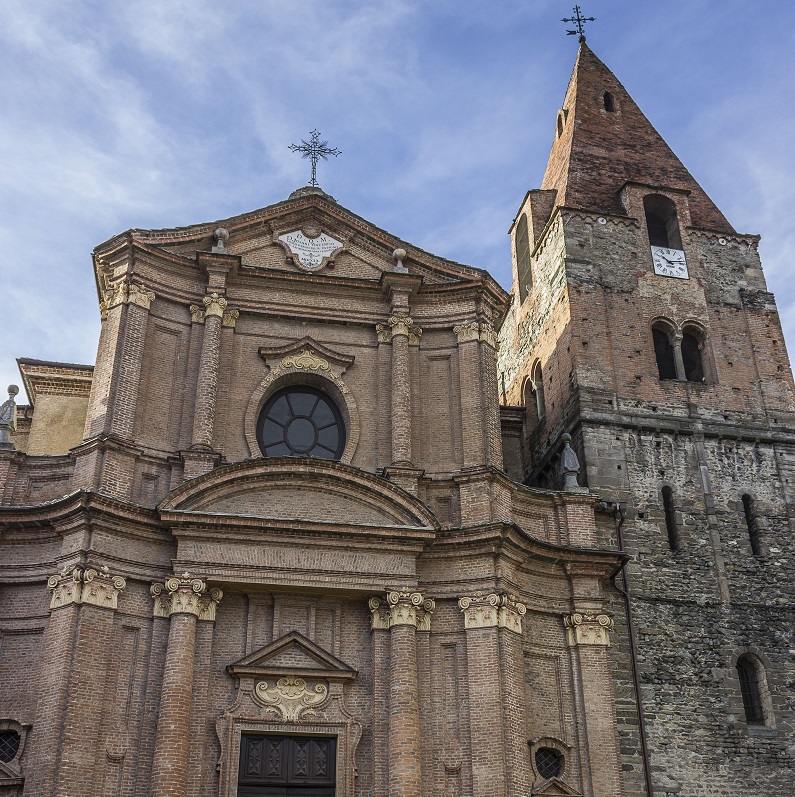
Parish Church of San Giovanni Vincenzo - Sant'Ambrogio - Edoardo Schiari
Gallery

Parish Church of San Pietro - Exilles
Parish Church of San Pietro - Exilles - Massimo Sebastiani

Church of Sant'Antonio Abate - Melezet (Bardonecchia)
Church of Sant'Antonio Abate - Melezet (Bardonecchia) - Massimo Sebastiani


You might also be interested in...
- event Heritage meets new forms of expression in Buttigliera Alta
- campaign The Free 2026 Guide is now available: 60 pages to discover the treasures of the Susa Valley.
- campaign Novalesa 726-2026, 1300 years since the foundation of the abbey
- book Cultural heritage
- book Diocesan Museum System
- book Historic parish churches
- book Abbeys and monasteries
- book Frescoed cycles
- book The European Renaissance by Antoine De Lonhy
- shopping_cart La pittura barocca in Valle di Susa. I dipinti religiosi di Sei e Settecento.