Home / Places /

Special Area of Conservation Cima Fournier and Black Lake

forest Environment
eco Nature 2000 Ecological Network Sites
explore Territory

Cima Fournier e Lago Nero, 10054 Cesana Torinese

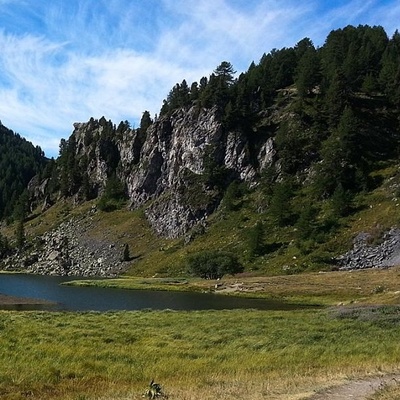
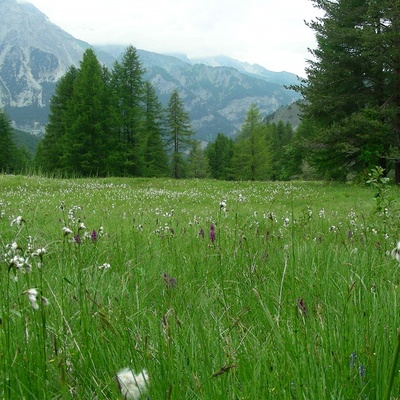
The territory of this SAC is curiously divided into two distinct areas: a smaller one above the village of Bousson, preserving a boggy area, and a larger one that from the State border with France, along the ridge between Cima Saurel and Cima Fournier, reaches up to the military road and encompasses the entire complex of glacial valleys and basins with a water collection system for the melting of snowfields into wetlands and lakes, of which Lago Nero is the largest and most well-known.

The landscape with rounded peaks and alpine meadows, along with the presence of Roc La Luna peak, gives rise to the name Monti della Luna to indicate this area, known as a tourist destination both in winter and summer, with the famous Capanna Mautino refuge being among the enthusiasts' destinations. The forest cover consists of larch and cembre pine woods, but of the 6 community habitats, the majority are linked to alpine environments with dwarf shrub formations of ericaceous and Dryas octopetala, screes of calcareous schist with Mountain pine and Berardia subacaulis, and aquatic environments of low-altitude alkaline bogs with rare species such as Carex limosa and Swertia perennis and orchids of the genus Dactylorhiza. In the lakes, defined at the European level as oligomesotrophic calcareous waters with benthic vegetation, the genus Chara is present, and in the bogs, Menyanthes trifoliata, Triglochin palustre, and Viola palustris. The entomofauna is typical of high-altitude meadows with rarities linked to the presence of water, such as the butterflies Erebia gorge and Erebia pluto that feed on plants found in the screes and the grasshopper Stethophyma grossum. As for avifauna, the species are those typical of alpine regions, including the Ptarmigan and the Black Grouse, which has an important singing arena here.

The meadows of the mountain plains used to be mown: today they are grazed, and the presence of numerous cattle in the wet areas increases the negative phenomenon of siltation and pollution from nitrogenous slurries.

Contacts

Our partners:

© 2026 Valle di Susa
Tesori di Arte e Cultura Alpina
Tel. 0122 622640 Email. info@vallesusa-tesori.it
Follow us on our socials